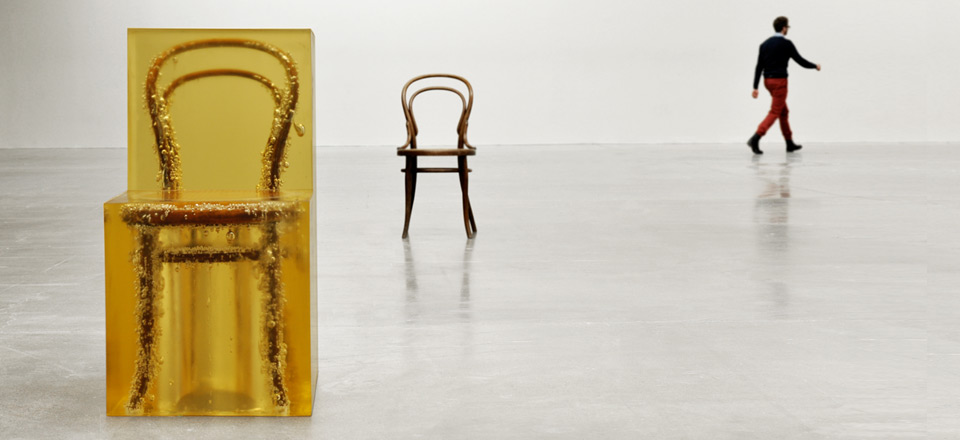
Biały Kamień Contemporary represents a collection of Environmental art, Eco art, Recycling art and Sustainable art. It’s a kind of experimental reserch responding to simple questions : How environment and sustainable development influences on a production of contemporary artists?; And how to transform simple things and materials to an inspiring substance?
We are interested in showing various concepts and techniques from oil painting to raisin and different facilities of environmental art.
Our stand provides examples of three different views on opportunities of an environmental art:
We show Gagarin - a unity of the universe, and parallels between the metaphorical and physical cosmos. This is a view on the environmental art as to the global challenges to achieve inner peace in the huge world. A slight naivety in his paintings is a foundation of strict logical structure. Compositions of his works are full of conventional schematic in order to expand the perception of a reflex angle
The second part of our stand announces the growing interest of artists to the recycled materials. Inspired by her anxious attitude to the material, we have selected Grażyna Bartnik to show how to create artworks full of awe and spirituality by inartistic things, that fill the casual life.We want to show how cardboard boxes become an exciting narrative of artistic substance.
And the third way of expression in environmental art is presented by Kasia Januszko. She creates paintings full of pure energy using a unique exclusive cellulose made to each artwork and selected carefully. An important part of the concept of her work focused on the production of materials. This is an industrial approach in an environmental art
.

Title: Moon cycles evolution Cycle:Space III Year: 01/2011 Size: 50x120 cm Technique: oil on canvas

Title: Sunrise Cycle:Space II Year: 01/2011 Size: 50x120 cm Technique: oil on canvas

Title: 10.02.2009 Kosmos 225 & Iridium S3 telecommunication satellites approached to each other less than
II. Environmental art
Nowadays, many contemporary artists are increasingly focused on traditions of Arte - Povera. Term coined by the Genoese critic Germano Celant in 1967 for a group of Italian artists who, from the late 1960s, attempted to break down the ‘dichotomy between art and life’ (Celant: Flash Art, 1967), mainly through the creation of happenings and sculptures made from everyday materials. Such an attitude was opposed to the conventional role of art merely to reflect reality. In general the work is characterized by startling juxtapositions of apparently unconnected objects,
furthermore, Arte Povera’s choice of unglamorous materials had been anticipated by more recent work.
These techniques have since become extremely common tools in contemporary art; in fact this is one of the reasons that such a small and short-lived movement continues to have such relevance today.
As well as expressing their interest in social issues, the recycling artiests are preoccupied with creating various forms of physical interaction between the work of art and its viewer. This eclecticism in fact emphasized the essential difference between homogeneous traditional cultures and pluralistic modern ones. Eco Art projects is conceived to be used by variouse subjects of different interests.
It is closely connected with a modern philosophical system, developed by Peter Sloterdijk. The main idea cristalizes a sense of globalism for each individual – in general, each of us lives in a «bubble» consisting of different places and habits. It’ s a philosophical method of Globalism based on an explication. According to this theory, the relevance of recycling art consists of immediate proximity to a real life. An explication is perceived as a vital principle. In this context, eco art strive to become “the art of existence” with the intention to make a philosophy of being and existence a kind of aesthetic values.
Another, equally important idea of Eco - Art is Recycling is our future, our Earth has limited resources, we need to look at things differently and learn how to reuse them as a RE-cycles and use our materials and consumer products repeatedly in order to preserve the environment. It’s a kind of art making to a functional format.
The field is growing rapidly with hundreds of artists working around the world. For this reason, there are multiple definitions of «Eco art». It’s basic concept of improving the human relationship to the natural world through the visual art experience and products. This art-environment-functional concept can take many forms, including education, advocacy, negotiation, action.
Much environmental art is ephemeral, designed for a particular place and involves collaborations between artists and others such as scientists, educators and community groups.
Recycling art can be embrased as «truly new» and « authentic new». This kind of art can harmoniously integrate in the modern art due to a compliance Of the delicate balance between «an eternal» and «an initial». According to a historicism of Hegel's type «authentic new» is just a kind of sign of historical progress. So that, development of recycling art is one of main courses of cultural evolution.
Because of the features of ultra-realistic philosophy, recycling art has no coflict between theoretical principles and practice. There are analytical capabilities in the creating process.
So the environmental art: Interprets nature, creating artworks to inform people and raise awareness about nature and its processes, and/or about environmental problems we face; Is concerned with environmental forces and materials; Re-visions the human relationship to nature, proposing and inspiring new ways for people to co-exist with their local environments.
By breaking out of the traditional confines of what is considered art and engaging in real world issues - ecoartists are allowing their art to have a function. They are reaching out across disciplines and helping to bridge the gap between art and life by raising awareness and appreciation for our natural resources. By giving aesthetic form to restored natural areas and urban sites, they are engaging in a collaborative process with nature, practicing a socially relevant art. Ecoartists challenge perceptions using metaphor, poetry, symbols, images and narrative to translate ideas. They can see broad patterns that others may overlook. By implementing a participatory structure with the diverse people that make up communities, -politicians, urban planners, architects, scientists, educators and stakeholders- these artists are pointing the way towards a new paradigm of environmental consciousness and sensitivity.
Ecological artwork can help engender an intuitive appreciation of the environment, address core values, advocate political action, and broaden intellectual understanding.